Front Suspension Health Estimator
Input your driving context and current symptoms to receive a personalized assessment of your front suspension health and recommended actions.
Driving Context
Suspension Health Assessment
--
Enter details to calculate
Select your driving conditions and symptoms to see potential causes and fixes. This tool estimates wear based on common failure patterns described in automotive literature.
You’re driving along a familiar road when you hear that sickening clunk over a small bump. Or maybe your steering wheel has started to wander slightly to the left, forcing you to constantly correct it. These aren’t just annoying quirks; they are loud signals from your car’s front end. The front suspension is the unsung hero of your vehicle’s handling and safety, absorbing shocks and keeping your tires glued to the tarmac. But it takes a beating every single day. Understanding what actually breaks these components can save you thousands in unnecessary repairs and keep you safe on the road.
| Cause Category | Specific Mechanism | Primary Affected Parts |
|---|---|---|
| Road Hazards | Impact shock from potholes, speed bumps, or debris | Control arms, ball joints, struts |
| Wear and Tear | Friction, rubber degradation, metal fatigue | Bushings, tie rod ends, springs |
| Maintenance Neglect | Lack of lubrication, ignored alignment issues | Ball joints, CV boots, wheel bearings |
| Environmental Factors | Salt corrosion, water intrusion into seals | Strut mounts, coil spring seats |
The Road Surface Reality Check
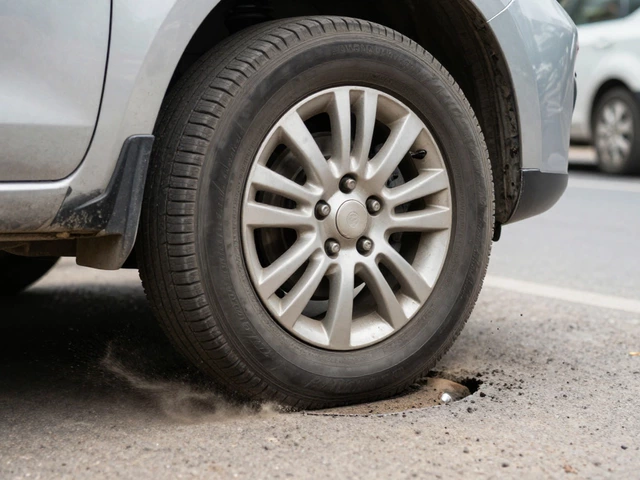
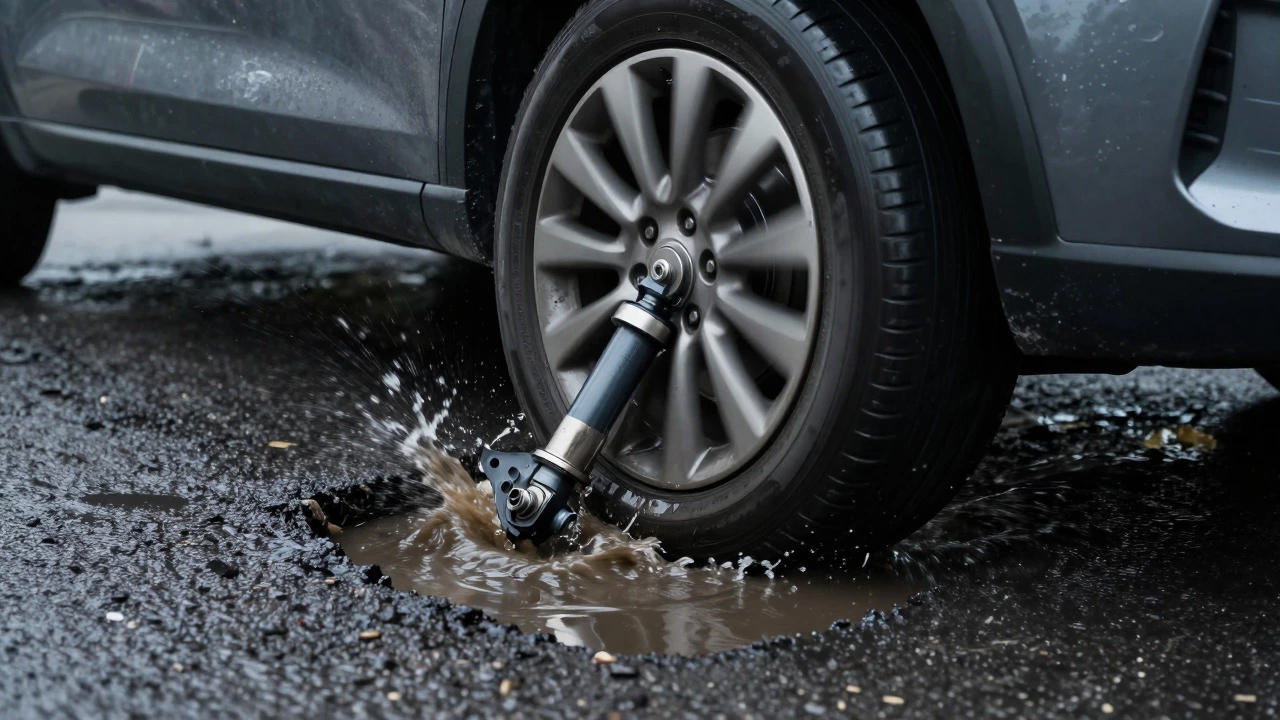
Let’s be honest: roads aren’t perfect. In the UK, especially around Bristol where older infrastructure meets modern traffic, potholes are practically part of the landscape. When you hit a deep pothole at speed, the force doesn’t just disappear. It travels up through the tire, into the rim, and directly into the front suspension system designed to absorb vertical impacts while maintaining wheel contact with the road. This sudden spike in pressure can bend control arms, crack strut housings, or pop ball joints out of their sockets. Even if nothing breaks immediately, repeated minor impacts cause micro-fractures in metal components and accelerate the breakdown of rubber bushings.
It’s not just about big holes, either. Aggressive curb parking-often called "curbing"-can twist steering racks and damage tie rod ends. If you frequently park close to high curbs or navigate tight city streets with raised edges, you’re putting lateral stress on components designed primarily for vertical movement. Over time, this misalignment wears down the joints unevenly, leading to premature failure.
Worn Out Rubber and Grease
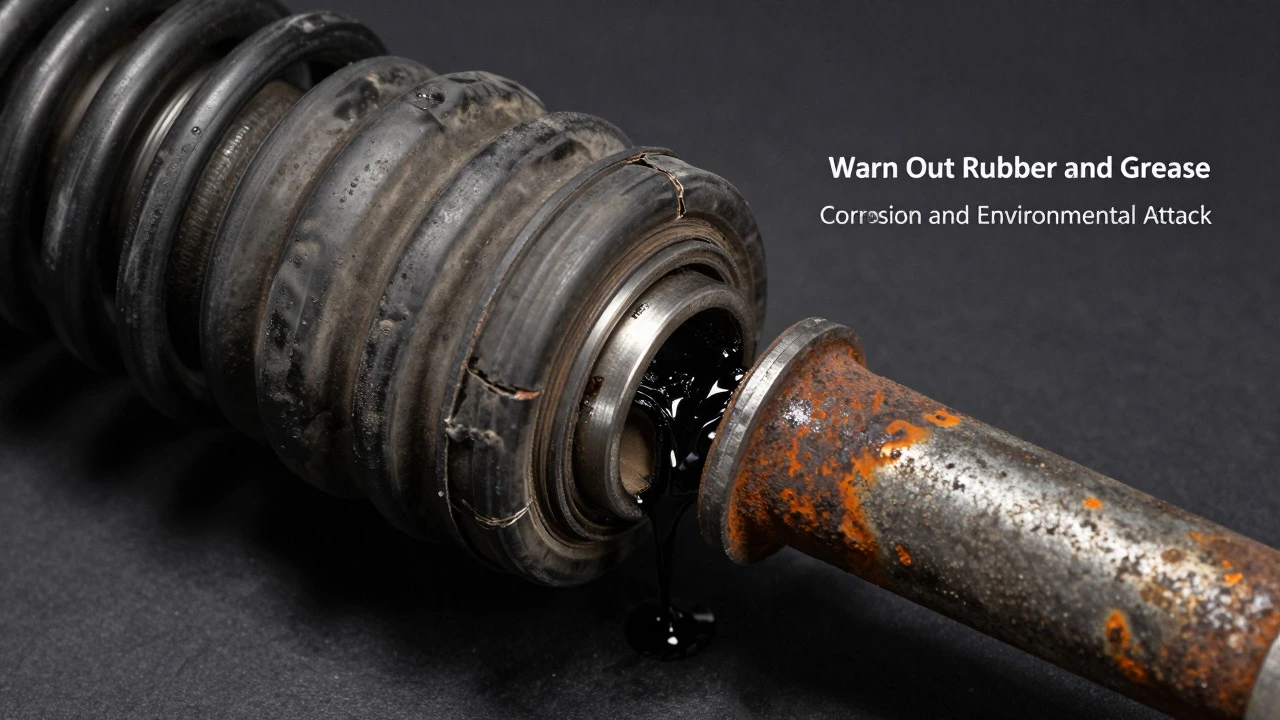
Your suspension isn’t just metal; it’s heavily reliant on rubber and grease. Bushings, which are rubber sleeves that isolate vibration between metal parts, dry out and crack as they age. Once the rubber splits, metal-on-metal contact begins. This friction generates heat and grinds away the softer metal components, such as aluminum control arms. You might notice increased noise over bumps or a vague feeling in the steering before anything visibly breaks.
Similarly, ball joints rely on packed grease to reduce friction. If the protective boot tears-which often happens due to age or debris-the grease washes out, and dirt gets in. This turns the joint into a grinder. A failing ball joint is dangerous because it connects the steering knuckle to the control arm. If it snaps while driving, the wheel can collapse inward, causing immediate loss of control. Regular visual inspections of these rubber boots are cheap insurance against catastrophic failure.
The Alignment Connection
Many drivers ignore alignment issues until the tires are ruined. However, poor alignment doesn’t just eat tires; it stresses the suspension. If your wheels are toe-in or toe-out incorrectly, the tires scrub against the pavement rather than rolling smoothly. This constant lateral force puts immense strain on tie rod ends and steering linkages. They have to work harder to hold the wheels in place, leading to early wear.
Furthermore, an unaligned car often pulls to one side. To compensate, drivers subconsciously fight the steering wheel, adding torsional stress to the steering rack and column. Over months or years, this subtle abuse compounds, loosening mounting points and wearing out internal gears within the power steering pump or rack-and-pinion system. If you notice your steering wheel isn’t centered when driving straight, get it checked. It’s a symptom, not just a cosmetic issue.
Corrosion and Environmental Attack
If you live in coastal areas or regions where winter salt is used extensively, corrosion is a silent killer. Salt accelerates rust on steel components like coil springs and control arms. Rust weakens the structural integrity of these parts, making them prone to snapping under normal loads. More subtly, corrosion affects the mounting points where suspension components attach to the chassis. If these bolts seize or the surrounding metal rots, the entire assembly becomes loose and unstable.
Water intrusion is another factor. Shock absorbers and struts are sealed units. If the piston rod gets scratched by grit or sand, the seal fails, and hydraulic fluid leaks out. Without fluid, the strut loses its damping ability, causing the car to bounce excessively after bumps. This bouncing increases load variations on other suspension parts, creating a domino effect of wear.

Driving Habits That Hurt Your Car
Your driving style plays a massive role in suspension longevity. Speeding over speed bumps is a classic mistake. Those bumps are designed to slow you down, but many treat them as jumps. Hitting a speed bump at 30 mph instead of 15 mph multiplies the impact force exponentially. Similarly, carrying heavy loads beyond your vehicle’s rated capacity compresses the springs and strains the dampers. If you regularly haul heavy gear in the trunk or roof box, consider upgrading to heavier-duty springs or checking if your current setup is struggling.
Aggressive cornering also contributes to wear. While fun, hard cornering places significant lateral G-forces on the outer wheel’s suspension components. The bushings and ball joints on the outside of the turn bear the brunt of this force. Doing this repeatedly without proper maintenance shortens the lifespan of these critical joints.
How to Spot Early Warning Signs
Catching problems early prevents expensive replacements. Listen for clunks, knocks, or squeaks when turning or going over bumps. Feel for vibrations in the steering wheel at specific speeds, which might indicate a bent rim or worn wheel bearing (often mistaken for suspension issues). Watch your tires for uneven wear patterns, such as feathering or cupping, which signal alignment or damper problems.
Visually inspect the area behind your front wheels. Look for oil leaks from struts, cracked rubber boots on ball joints, or rusted springs. If the car sits lower on one side, a spring may have broken. Don’t wait for the noise to become unbearable. Addressing a worn bushing now costs significantly less than replacing a bent control arm later.
Can bad shocks affect my brakes?
Yes, absolutely. Worn shocks allow the car to dive forward excessively during braking. This shifts weight unpredictably, reducing tire contact patch stability and increasing stopping distances. Proper damping ensures tires stay flat on the road, maximizing brake efficiency.
How long do front suspension parts typically last?
There is no fixed mileage, but generally, bushings and ball joints last between 50,000 to 80,000 miles depending on road conditions. Struts may last longer, up to 100,000 miles, if roads are smooth. Harsh environments and aggressive driving shorten this lifespan significantly.
Is it safe to drive with a bad ball joint?
No. A failing ball joint is a major safety hazard. If it separates completely, the wheel can detach from the steering linkage, causing total loss of control. If you suspect a bad ball joint, limit driving and get it repaired immediately.
Do I need to replace all suspension parts at once?
Not necessarily. Mechanics often recommend replacing pairs (left and right) for balance, especially for struts and springs. However, if only one component is damaged, you can replace just that one. Always check related parts for wear when doing so.
Why does my car pull to one side after hitting a pothole?
Hitting a pothole can knock your alignment out of spec. It may also bend a control arm or damage a tie rod end. The pulling sensation is usually due to incorrect toe or camber angles resulting from the impact.