Exhaust System Recommendation Tool
There is nothing quite like the sound of a well-tuned engine. It’s deep, resonant, and tells you exactly what your car is doing. But there is also nothing more annoying than a drone that rattles your teeth at highway speeds or a check-engine light that kills your fuel economy because you bought the wrong part online. The difference between these two experiences comes down to one thing: knowing what to look for when buying an exhaust.
Most people treat the exhaust system as just a noise-maker. They want it louder, so they buy the loudest pipe they can find. This is a mistake. Your exhaust is a critical piece of engineering that manages pressure, removes toxic gases, and actually helps your engine breathe. Get it right, and you gain horsepower, save fuel, and enjoy a better drive. Get it wrong, and you lose power, annoy your neighbors, and potentially fail your MOT.
Understanding Material Quality: Stainless Steel vs. Mild Steel
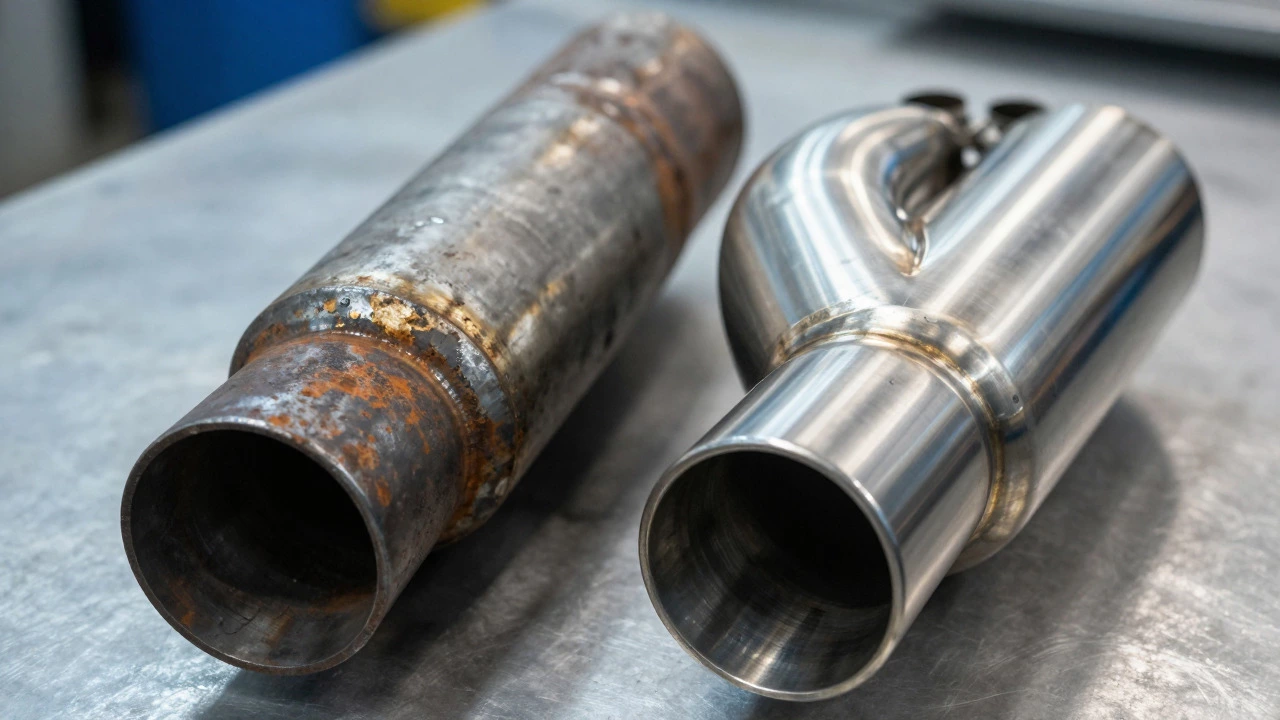
The first thing you need to decide is what the exhaust is made of. You will mostly see two options in the shop: mild steel (often called aluminized steel) and stainless steel. The price difference can be huge, but so is the lifespan.
Mild Steel is coated with aluminum to resist rust. It’s cheap, which makes it attractive for budget builds. However, once that coating chips off-which happens quickly in wet climates like the UK-the underlying steel rusts through. You might get two or three years out of a mild steel system before it starts leaking or falling apart.
Stainless Steel, on the other hand, contains chromium which creates a passive layer that protects against corrosion. For automotive use, you want 304 Stainless Steel. This is the industry standard for quality aftermarket parts. It handles heat cycling better than mild steel, meaning it won’t crack from thermal stress. If you live near the coast or in a rainy area like Bristol, stainless steel isn't a luxury; it's a necessity. Yes, it costs more upfront, but you won't be replacing it every few years.
| Material | Lifespan | Cost | Best Use Case |
|---|---|---|---|
| Mild Steel (Aluminized) | 2-4 Years | Low | Budget daily drivers, temporary fixes |
| 304 Stainless Steel | 10+ Years | High | Long-term ownership, performance cars |
| Titanium | Indefinite | Very High | Track racing, weight reduction enthusiasts |
Choosing the Right System Type
Not all exhausts are created equal. Depending on your goals, you need to pick the right configuration. Here is how the main types break down:
- Cat-Back Systems: This replaces everything from the catalytic converter backwards. It’s the easiest to install and usually keeps the car legal for road use since the emissions equipment stays intact. You’ll get a better sound and a slight weight reduction, but don’t expect massive horsepower gains here.
- Downpipe Systems: This replaces the section immediately after the turbocharger or engine manifold. It often includes a high-flow catalytic converter or no catalyst at all. This reduces backpressure significantly, unlocking real power gains, especially in turbocharged cars. Be warned: removing the catalytic converter may make your car illegal for street driving in many regions.
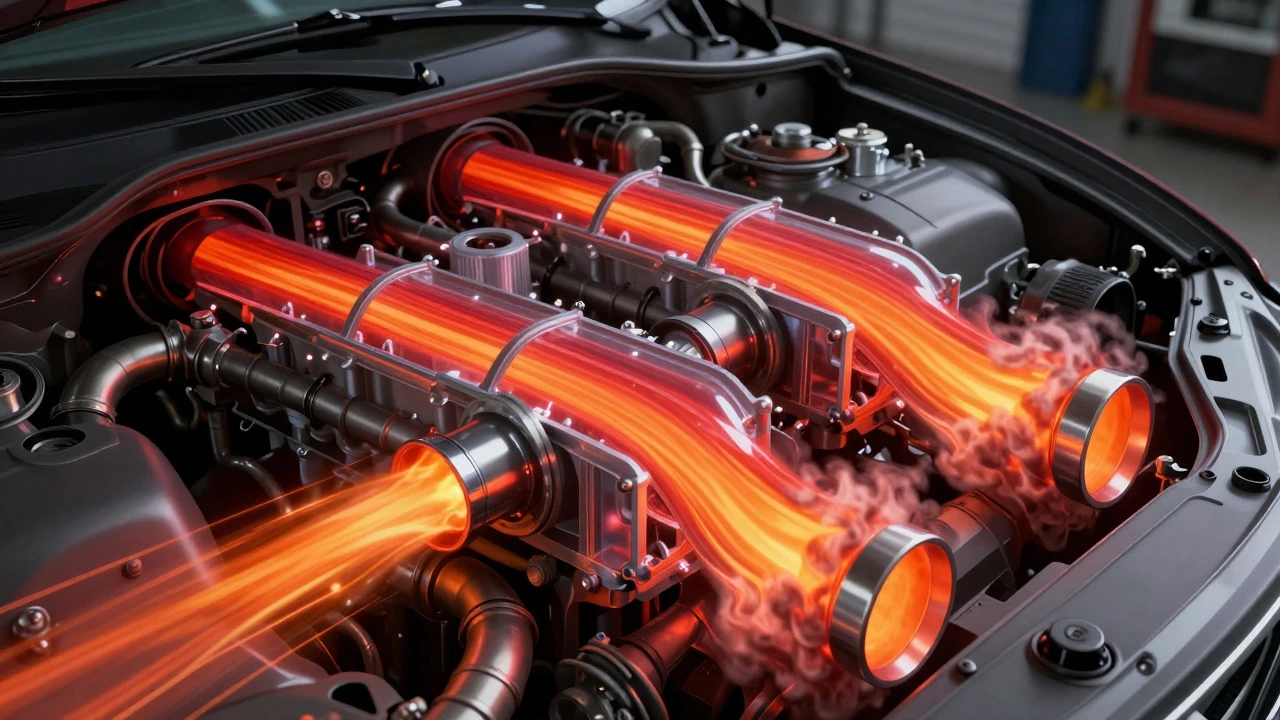
- Header/Manifold Systems: These replace the stock exhaust manifold. They improve airflow right at the source. Headers are great for naturally aspirated engines but can cause heat issues under the hood if not insulated properly.
- Full Systems: This covers everything from the manifold to the tailpipe. It offers the best balance of flow, sound, and weight savings but requires the most work to install.
If you just want a deeper tone without touching emissions legality, stick to a cat-back. If you are chasing peak horsepower numbers, you need to look at downpipes and headers.
Pipe Diameter and Flow Dynamics
A common myth is that bigger pipes mean more power. In reality, bigger pipes can actually kill your low-end torque if chosen incorrectly. Think of it like drinking a milkshake through a straw. A tiny straw makes it hard to suck up the liquid (high backpressure). A giant bucket lets the liquid spill everywhere (low velocity).
Your exhaust needs to maintain gas velocity to create scavenging effect-pulling fresh air into the cylinders. If the pipe is too wide, the exhaust gases move too slowly, and you lose efficiency. If it’s too narrow, the engine chokes.
Here is a general rule of thumb based on displacement:
- Under 2.0L Engines: Stick to 2.5-inch pipes. Going larger will likely hurt your throttle response.
- 2.0L - 3.5L Engines: 2.75-inch to 3-inch pipes are usually the sweet spot.
- Over 3.5L V8s/V10s: 3-inch to 3.5-inch pipes help manage the massive volume of gas produced.
Always check the manufacturer’s recommendations. Many modern performance exhausts use stepped piping-starting smaller near the engine and getting wider towards the rear-to keep velocity high while allowing free flow at the exit.
Fitting Style: Bolt-On vs. Weld-On
How the exhaust attaches to your car matters for both installation difficulty and long-term reliability. There are two main styles you will encounter.
Bolt-On Flanges use clamps and bolts to connect sections together. This is great for DIYers because you can remove the exhaust later if you sell the car or switch parts. However, bolted connections can vibrate loose over time. You need to check them regularly and ensure the flanges are flat and clean to prevent leaks.
Weld-On Systems come pre-welded by the manufacturer. This means fewer potential leak points and a cleaner look. Installation usually involves cutting off the old exhaust and welding the new one in place. While this requires professional fitting, the result is often more durable and rigid. For track cars, weld-ons are preferred because they withstand vibration better.
If you are installing it yourself, look for "slip-fit" designs with high-quality band clamps. Avoid cheap spring clamps; they rarely hold tight enough against the pressure pulses of an engine.
Sounds and Resonators: Managing Drone
You want a sporty sound, not a tractor rumble. The key to avoiding annoying cabin drone lies in the design of the muffler and the use of resonators.
Resonators are small chambers designed to cancel out specific low-frequency sound waves that cause drone. A good aftermarket exhaust will include resonators tuned to your engine’s RPM range. Without them, you might love the sound at 3,000 RPM, but hate it at 60mph cruising speed.
Pay attention to the type of muffler used:
- Chambered Mufflers: Traditional design with internal baffles. They are quieter and produce a deeper, refined tone.
- Straight-Pipe / Axle-Back: Minimal restriction. Very loud, raw, and aggressive. Great for track days, terrible for long motorway journeys.
- Valvetronic Exhausts: These have electronic valves that open at high RPMs. They give you a quiet cruise mode and a race-mode scream. They are expensive and require wiring, but offer the best of both worlds.
Before buying, watch video reviews of the specific exhaust on your exact car model. Sound is subjective, and what sounds cool on a BMW might sound hollow on a Ford.
Legal Compliance and Emissions
In the UK, staying legal is crucial. The MOT test checks for excessive smoke, visible defects, and abnormal noises. More importantly, tampering with emissions control devices can lead to fines and tax increases.
Ensure any exhaust you buy retains the original catalytic converter or uses a certified high-flow replacement that meets Euro 6 standards. Removing the DPF (Diesel Particulate Filter) entirely is illegal for road-going vehicles unless the car is registered as historic (over 40 years old) or used exclusively for competition.
Look for exhausts marked as "MOT Legal" or "Emissions Compliant." Reputable brands like Akrapovič, Borla, and Milltek provide documentation proving their parts meet regulatory requirements. Don’t risk your registration saving £50 on a non-compliant pipe.
Brand Reputation and Warranty
The exhaust market is flooded with generic Chinese-made pipes that look good in photos but fall apart in six months. Stick to established brands that offer warranties. A genuine warranty indicates the manufacturer stands behind their welding quality and material thickness.
Brands like Borla, MagnaFlow, and Catback Performance have decades of testing data. They know how heat affects metal and how vibrations affect joints. Reading user forums specific to your car model can also reveal which brands have consistent fitment issues. A perfect-looking exhaust that doesn’t line up with your mounting brackets is a nightmare to install.
Installation Considerations
Even the best exhaust is useless if it rubs against your chassis. Before purchasing, check the clearance specifications. Some performance exhausts sit lower to reduce length, which can scrape on speed bumps or steep driveways.
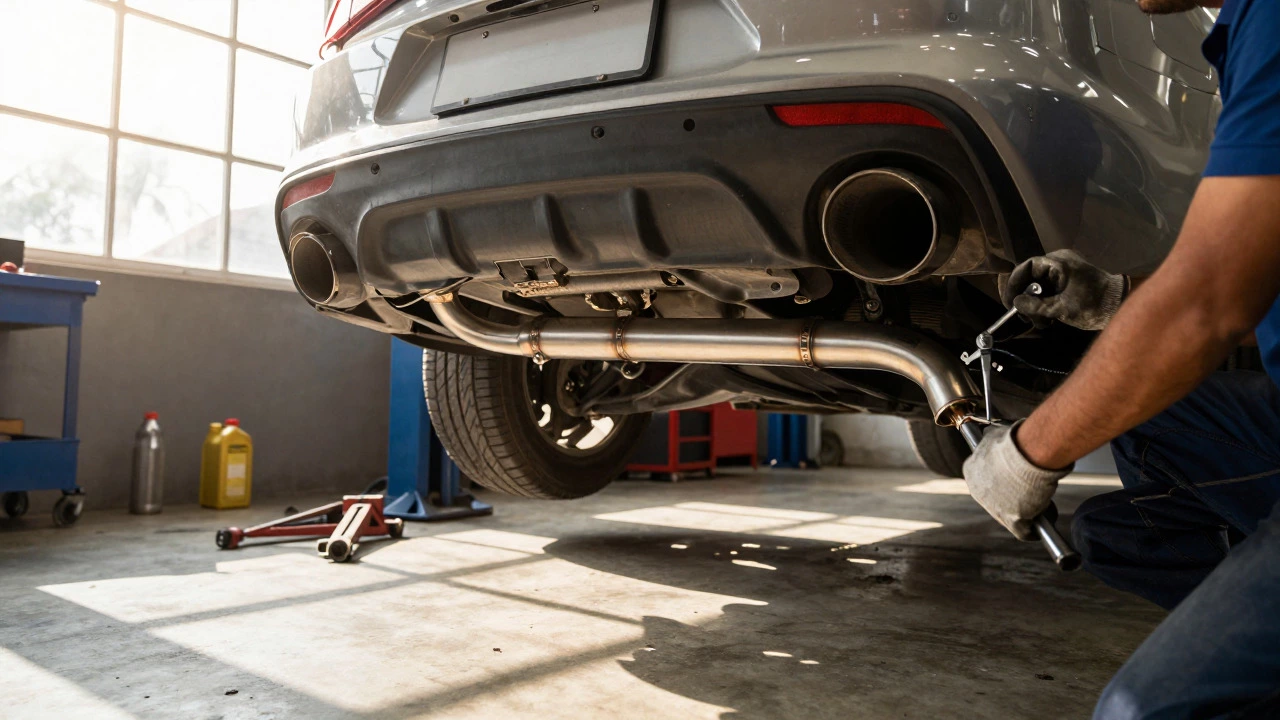
If you are doing a DIY install, gather the right tools: a jack, safety stands, penetrating oil (for rusty bolts), a ratchet set, and possibly a reciprocating saw if you need to cut the old exhaust off. Wear gloves and eye protection; exhaust components are heavy and sharp.
For complex swaps involving downpipes or headers, professional installation is recommended. Torque specs must be precise, and misalignment can cause cracks within weeks. Factor in labor costs when comparing prices online.
Will a new exhaust increase my car's horsepower?
Yes, but the amount depends on the system. A simple axle-back exhaust might add 1-3 horsepower due to reduced weight and slightly improved flow. A full system including downpipes and headers can add 10-20+ horsepower, especially in turbocharged engines where reducing backpressure allows the turbo to spool faster and spin more efficiently.
Is stainless steel worth the extra cost?
Absolutely. Stainless steel lasts significantly longer than mild steel, resists rust better, and maintains its appearance. While it costs 30-50% more initially, you avoid replacement costs within a few years. For most drivers, the long-term value outweighs the upfront price difference.
Can I install an exhaust myself?
Simple axle-back or cat-back systems are generally DIY-friendly with basic tools. Downpipes and headers require more skill, often needing cutting, welding, and precise torque settings. If you lack experience with exhaust removal, professional installation ensures proper fitment and prevents leaks.
What pipe diameter should I choose?
Match the diameter to your engine size. Small engines (under 2.0L) typically benefit from 2.5-inch pipes. Mid-size engines (2.0-3.5L) work well with 2.75-3 inch pipes. Large V8s may use 3-3.5 inch pipes. Oversizing reduces gas velocity and hurts low-end torque.
Will a louder exhaust fail my MOT?
Only if it is excessively noisy or has visible defects. The MOT examiner checks for abnormal noise compared to a similar unmodified vehicle. Most reputable aftermarket exhausts are designed to pass MOT, but straight-pipe setups or poorly installed systems with leaks often fail.