Brake Pad Health & Cost Estimator
Input Vehicle Data
Warning: Your pads are critically low. You will likely need new rotors too (+$100-$400). Ignoring this risks total brake failure.
Enter your brake details to see safety status and cost estimates.
Imagine you are driving home from work. You press the brake pedal, and instead of a smooth stop, you hear a high-pitched screech that makes everyone in the car wince. Or maybe your dashboard lights up with a red circle icon that looks like a mystery code. The immediate question is: did my car try to warn me earlier? Will it tell me next time?
The short answer is: sometimes, yes. But relying solely on your car’s electronic voice can be dangerous. Modern vehicles have sophisticated systems to alert you to brake pad wear, which is the gradual thinning of friction material on brake components due to heat and pressure during stopping. However, these systems vary wildly between brands, models, and years. Some cars scream at you; others stay silent until metal grinds against metal.
Understanding how your specific vehicle communicates distress is critical for safety and wallet preservation. Ignoring early signs leads to rotor damage, which costs significantly more to fix than replacing pads alone. This guide breaks down exactly how cars signal brake issues, what those signals mean, and why you shouldn’t wait for a light to turn on before inspecting your brakes.
How Cars Signal Brake Pad Wear
Vehicle manufacturers use two primary methods to notify drivers about failing brakes: mechanical wear indicators and electronic sensors. Knowing which one your car uses changes how you interpret noises and dashboard lights.
Mechanical Wear Indicators (The Squealer)
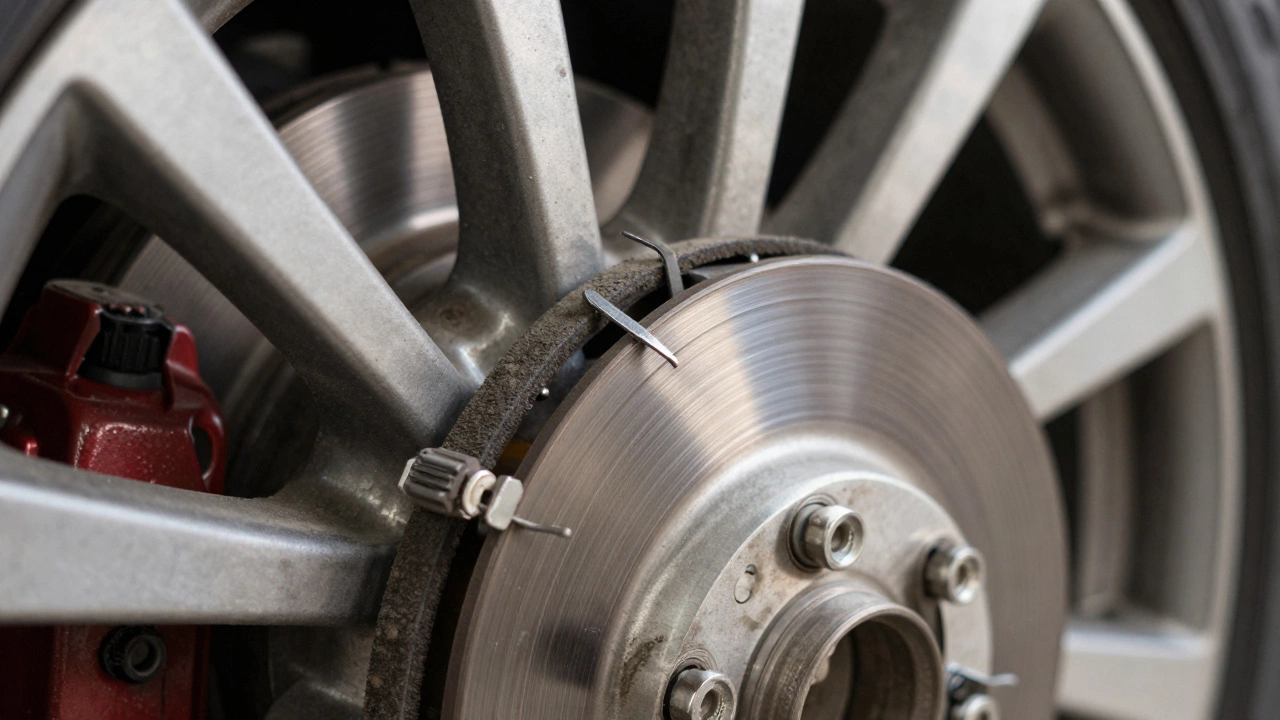
Most standard passenger cars come equipped with simple, low-tech mechanical wear indicators. These are small metal tabs embedded in the brake pad lining. As the pad wears down over thousands of miles, this tab eventually touches the rotor surface.
When contact happens, it creates a distinct, high-pitched squeal or chirp. It sounds like a bird call or a nail on a chalkboard. This noise is intentional. Engineers design it to be annoying enough to force you into a repair shop.
- What it sounds like: A consistent, sharp squeak every time you apply the brakes lightly.
- When it triggers: Usually when there are only 2-4 millimeters of pad material left.
- The catch: The noise often stops when you slam on the brakes hard because the pad shifts away from the indicator tab. Don't mistake silence for safety here.
If you hear this sound, your car is literally screaming for help. It has no battery, no wiring, and no dashboard light. The sound *is* the warning system.
Electronic Brake Wear Sensors
Newer vehicles, luxury brands, and many modern SUVs use electronic sensors. These are wires attached to the brake pad. When the pad wears down to a critical level, the wire snaps or gets cut by the rotor. This breaks an electrical circuit, sending a signal to the car's computer (ECU).
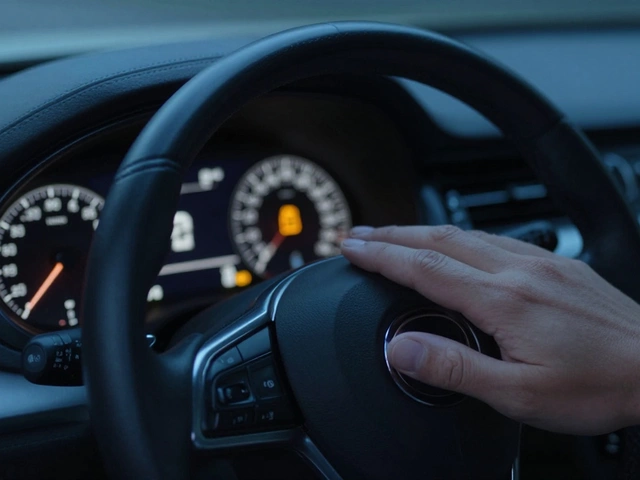
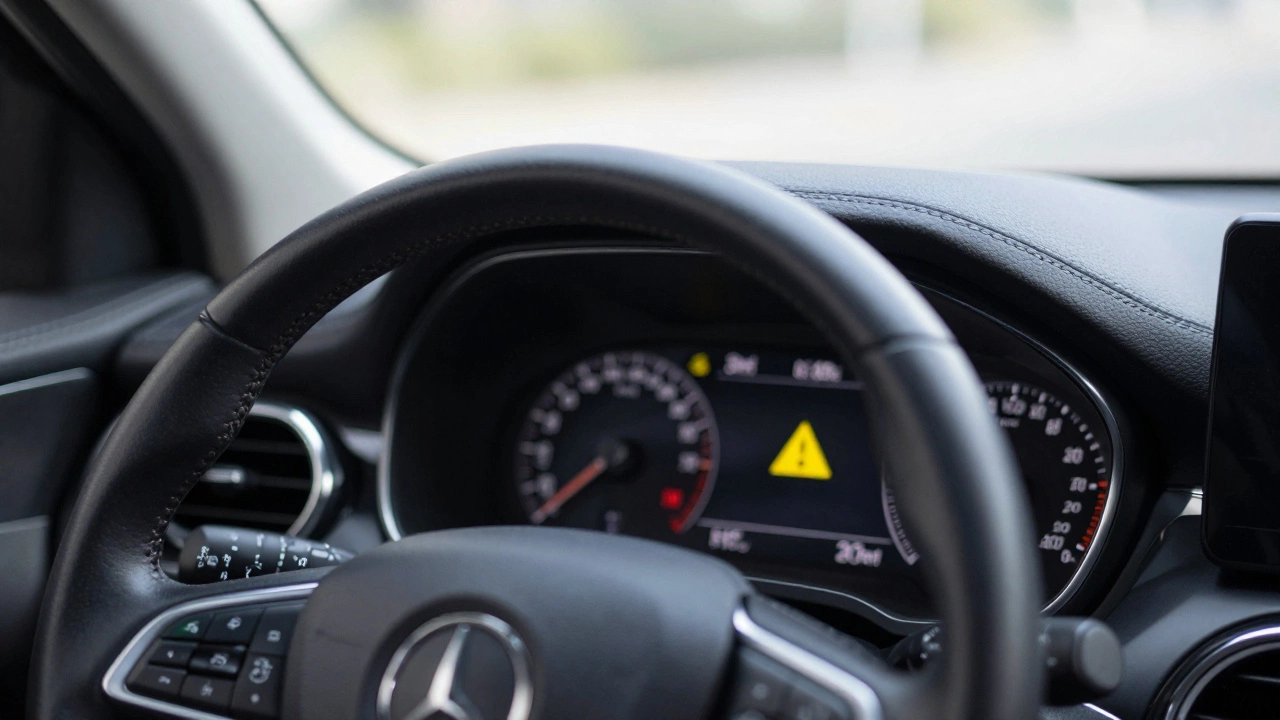
This results in a visual warning on your dashboard. Typically, you will see a message like "Check Brake Pads" or an icon resembling a circle with dashed lines around it.
| Feature | Mechanical Indicator | Electronic Sensor |
|---|---|---|
| Warning Type | Audio (Squealing noise) | Visual (Dashboard light/message) |
| Cost to Replace | Included with new pads | Sensors must be replaced with each pad set ($10-$30 extra) |
| Reliability | High (Hard to miss if you listen) | Medium (Lights can be ignored or malfunction) |
| Common In | Economy cars, older models | Luxury cars, EVs, newer SUVs |
Note that electronic sensors are not universal. Even within the same brand, a base model might lack them while the premium trim includes them. Check your owner’s manual to see if your vehicle has this feature.
Decoding Dashboard Lights: What Do They Mean?
Dashboards are confusing. There are several lights related to braking, and they mean very different things. Confusing them can lead to catastrophic errors.
- The Red Exclamation Mark (!) in a Circle: This is usually the parking brake light. If it stays on after you release the handbrake, it indicates low brake fluid levels. Low fluid can mean worn calipers, leaking lines, or severely worn pads causing the caliper piston to extend fully. This is urgent.
- The Yellow/Orange Circle with Dashed Lines: This is the specific brake pad wear warning found on cars with electronic sensors. It means the sensor wire has been cut. You have limited mileage left-usually less than 500 miles-before the pads are completely gone.
- The ABS Light (Anti-lock Braking System): This light relates to the anti-lock system, not necessarily pad thickness. However, wheel speed sensors located near the brake rotors can get dirty or damaged during brake service. If this light is on, your car may not prevent wheel lockup during emergency stops.
Never ignore a red brake light. A yellow warning gives you time to plan; a red warning demands immediate attention.
Physical Signs Your Car Can't Digitally Communicate
Even if your car lacks sensors, it will physically behave differently as brakes fail. Your body senses vibrations and changes in feedback through the steering wheel and brake pedal. Pay attention to these subtle cues.
Vibration in the Steering Wheel
If your steering wheel shakes or vibrates when you brake, especially at higher speeds, your rotors are likely warped or unevenly worn. This often happens alongside worn pads. Heat causes metal to expand and contract. If pads are uneven or stuck, they create hot spots on the rotor, leading to warping. This isn't just uncomfortable; it reduces stopping power.
Pedal Feel Changes
A healthy brake pedal feels firm and consistent. As pads wear, you might notice:
- Sponginess: The pedal goes further down toward the floor. This suggests air in the lines or low fluid.
- Softness: You have to push harder to achieve the same stopping effect.
- Grinding Sensation: A gritty feeling under your foot indicates debris or severe wear.
Pulling to One Side
If your car pulls sharply to the left or right when braking, one side is gripping harder than the other. This could be a stuck caliper, a collapsed brake hose, or uneven pad wear. A stuck caliper can overheat the wheel bearing and tire, posing a fire risk or blowout hazard.
Why Waiting for a Warning Is Risky
You might think, "I'll just drive until the light comes on." This strategy fails for three reasons.
First, mechanical wear indicators can become clogged with brake dust or rust, silencing the squeal. Second, electronic sensors can fail electrically without triggering a light. Third, and most importantly, the warning only tells you when the pads are *almost* gone. It does not tell you when they started wearing. By the time the sensor cuts, you have already lost significant friction material.
Driving on bare metal backing plates destroys your rotors. Rotors cost significantly more than pads. Replacing both pads and rotors doubles or triples the repair bill compared to replacing pads alone. Preventative maintenance saves money. Inspect your brakes every 10,000 to 12,000 miles, regardless of warnings.
How to Check Brake Pads Yourself
You don't need a mechanic to check pad thickness. You can do this in your driveway with a flashlight and a screwdriver.
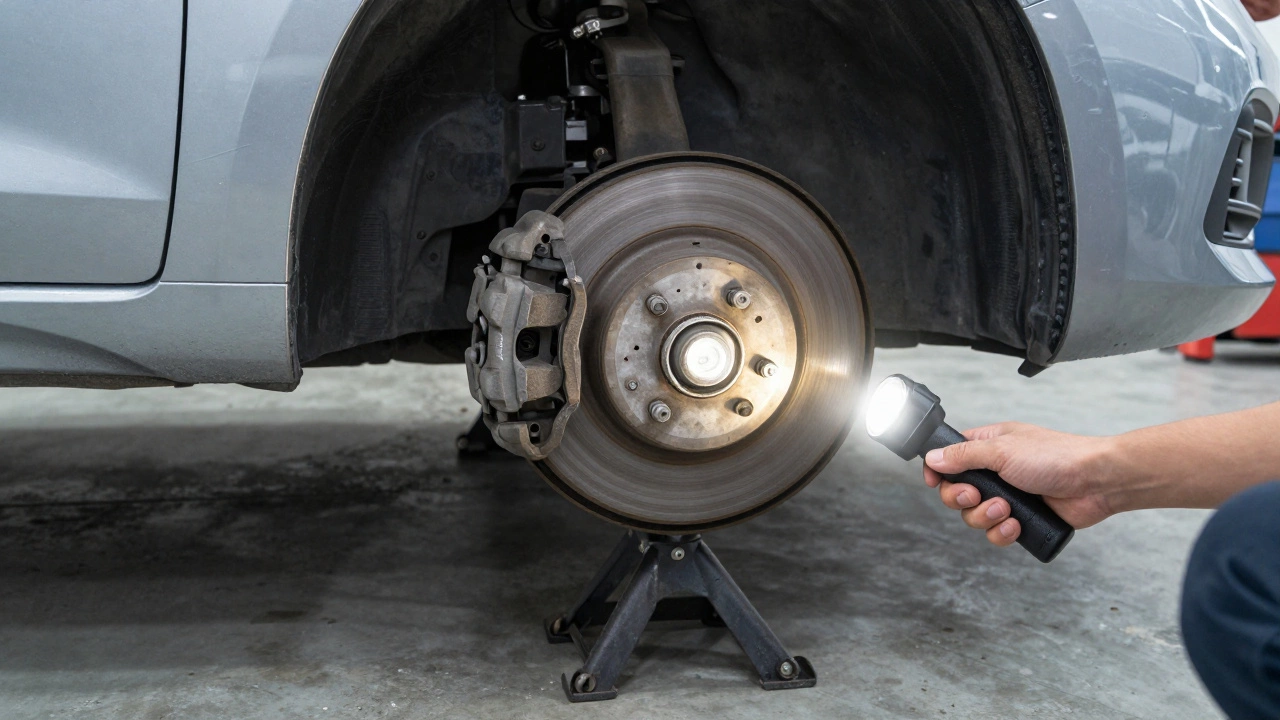
- Locate the Rotor: Look through the spokes of your wheel. You should see a shiny metal disc (the rotor) surrounded by a caliper assembly.
- Find the Pad: The brake pad sits inside the caliper, sandwiched against the rotor. On many cars, you can see the outer edge of the pad through the wheel gaps.
- Measure Thickness: Use a flashlight to shine light through the spokes. Estimate the thickness of the friction material. Ignore the metal backing plate; look only at the dark, rubbery-looking compound.
- Assess Condition:
- Good: More than 6mm thick.
- Replace Soon: Between 3mm and 6mm.
- Emergency: Less than 3mm. Replace immediately.
If you can't see clearly, remove the wheel. Jack up the car safely using jack stands, loosen the lug nuts, lift the vehicle, and remove the wheel. This gives you a clear view of all four corners.
Factors That Accelerate Brake Wear
Not all driving is created equal. Your habits directly impact how fast your pads degrade.
- City Driving: Stop-and-go traffic generates immense heat and friction. City drivers may need new pads every 20,000-30,000 miles.
- Highway Driving: Minimal braking means pads can last 50,000-70,000 miles or more.
- Towing Heavy Loads: Extra weight requires more force to stop, accelerating wear.
- Riding the Brakes: Keeping your foot lightly on the pedal while coasting generates constant heat, glazing the pads and reducing effectiveness.
Electric vehicles (EVs) complicate this picture. Many EVs use regenerative braking, where the motor slows the car to recharge the battery, reducing reliance on physical brakes. While this extends pad life dramatically, it also means you might go years without checking them. Never assume EVs never need brake checks. Calipers can seize from disuse, and pads can corrode.
FAQ
Can I drive safely if my brake pads are making noise?
You can drive cautiously to a repair shop, but you should not delay. The noise indicates the wear indicator is touching the rotor. You typically have 200-500 miles of safe driving left. Continuing to drive risks damaging the rotors, which increases repair costs significantly.
Why did my brake warning light come on suddenly?
If you have an electronic sensor, the wire likely snapped due to normal wear. If you have a red exclamation mark, check your brake fluid level immediately. Low fluid is a serious safety issue that could indicate a leak or severely worn components requiring immediate professional inspection.
Do electric cars need brake pad replacements?
Yes, but much less frequently. Regenerative braking reduces physical brake usage. However, EV owners should still inspect brakes annually. Lack of use can cause calipers to stick or seals to dry out, leading to sudden failure when physical braking is required.
How much does it cost to replace brake pads?
Parts typically cost $30-$150 per axle depending on the vehicle. Labor adds another $100-$300 per axle. If rotors need resurfacing or replacement, add $100-$400 per axle. Total costs range from $200 for basic economy cars to over $800 for luxury vehicles with complex caliper systems.
Can I replace brake pads myself?
Yes, it is a manageable DIY project for intermediate mechanics. You need a jack, jack stands, a wrench set, a C-clamp to compress caliper pistons, and brake cleaner. Always consult a service manual for your specific model. Improper installation can lead to brake failure.