Battery Reset: What It Is, Why It Matters, and What You Need to Know
When your car acts up—dashboard lights flashing, strange error codes popping up, or the engine stalling for no reason—a battery reset, a simple procedure to clear temporary glitches in your car’s computer system by disconnecting the battery. Also known as an ECU reset, it’s often the first thing mechanics suggest before diving into expensive repairs. But here’s the truth: a battery reset doesn’t fix broken parts. It only clears memory. Think of it like rebooting your phone when it freezes. It won’t fix a cracked screen, but it might make the touchscreen work again.
Modern cars rely on dozens of electronic control units (ECUs) that talk to each other. When power gets interrupted—like when the battery dies or you jump-start the car—these systems can get confused. They store temporary data: learned idle speeds, transmission shift patterns, fuel trim settings. If something goes wrong during a power loss, those settings can stick. A battery reset wipes that temporary memory and lets the car relearn from scratch. That’s why some people swear by it after replacing a battery or fixing a sensor. But if the problem is a failing oxygen sensor, a worn alternator, or a bad ground wire, a reset won’t help. It’ll just give you a false sense of fix.
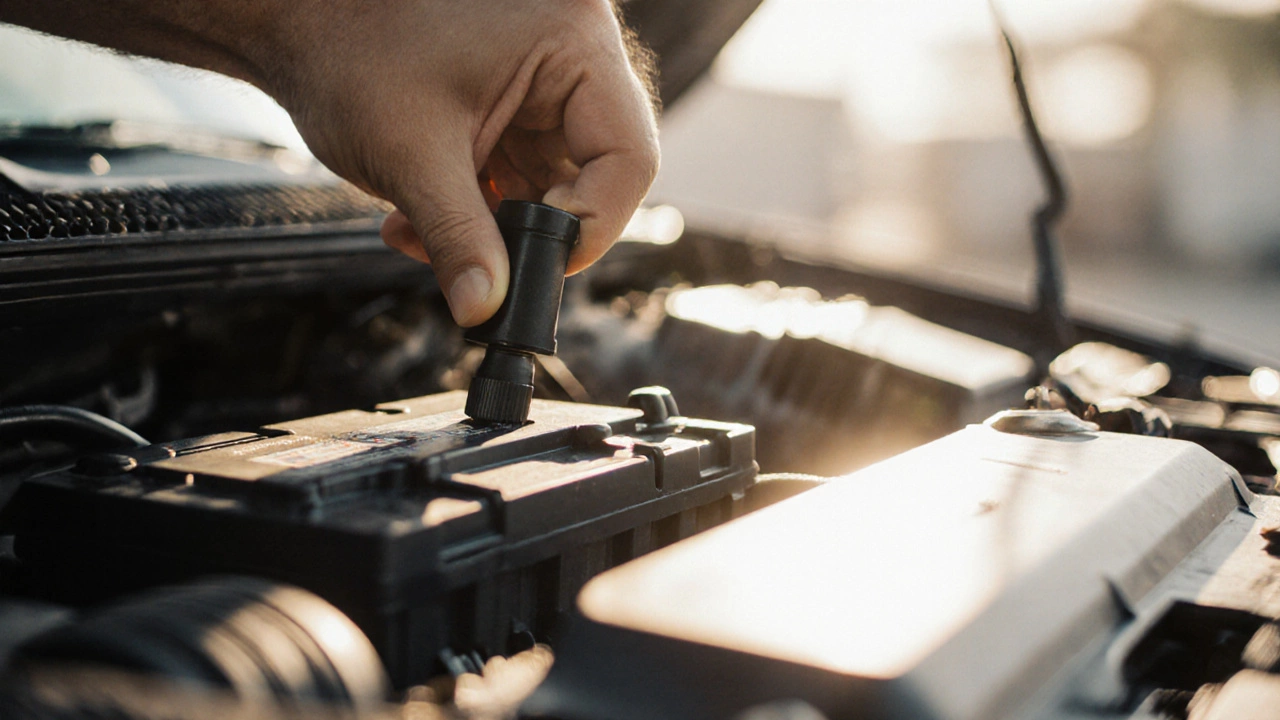
Here’s what actually happens when you do a battery reset. You disconnect the negative terminal for 10 to 15 minutes. That cuts power to all ECUs. When you reconnect it, the car starts fresh. But you’ll lose radio presets, clock settings, and sometimes even adaptive cruise calibration. Some cars need a special scan tool to relearn idle speed afterward. And if your car has a smart key or push-button start, you might need to re-sync the fob. It’s not complicated, but it’s not zero-effort either.
Why do people try it? Because it’s cheap. No tools, no parts, no shop visit. If your check engine light came on after a battery died, a reset might clear it. If your car idles rough after a jump-start, it might smooth out. But if the light comes back on in a day, you’ve got a real problem. And that’s where the posts below come in. You’ll find real-world guides on diagnosing electrical issues, spotting failing alternators, understanding why your car won’t start after a battery change, and what those weird dashboard lights actually mean. These aren’t theory pieces—they’re what mechanics and owners actually deal with. Whether you’re trying to fix a glitch yourself or just want to know if a mechanic is trying to upsell you, the answers are here.
-
9 Oct
- Recent
- Popular
-
 Driving with Bad Suspension: What Could Go Wrong?
Apr 15 2025
Driving with Bad Suspension: What Could Go Wrong?
Apr 15 2025
-
 What's Included in Car Suspension Systems?
Mar 31 2025
What's Included in Car Suspension Systems?
Mar 31 2025
-
 How to Prolong the Life of Your Windshield Wipers
Nov 25 2025
How to Prolong the Life of Your Windshield Wipers
Nov 25 2025