Clutch Free Play: What It Is, Why It Matters, and How to Spot Trouble
When you press the clutch pedal, there’s a tiny bit of movement before you feel any resistance—that’s clutch free play, the amount of pedal travel before the clutch disc begins to disengage from the flywheel. Also known as clutch pedal clearance, it’s a simple but critical part of how your transmission connects to the engine. If this gap is wrong, your clutch will wear out fast—or worse, fail while you’re driving.
Clutch free play isn’t just a number on a spec sheet. It’s the buffer that lets the clutch release smoothly. Too little free play means the clutch disc is always slightly engaged, causing heat buildup and premature wear. Too much means you’re not fully disengaging the clutch, leading to grinding gears and hard shifts. Both situations show up in the same places: a clutch that feels spongy, a car that lurches when you let go of the pedal, or a clutch that slips under load. These are the same symptoms you’ll see in posts about bad clutch signs, symptoms like slipping, difficulty shifting, or a pedal that goes all the way to the floor, and they often start with poor clutch free play.
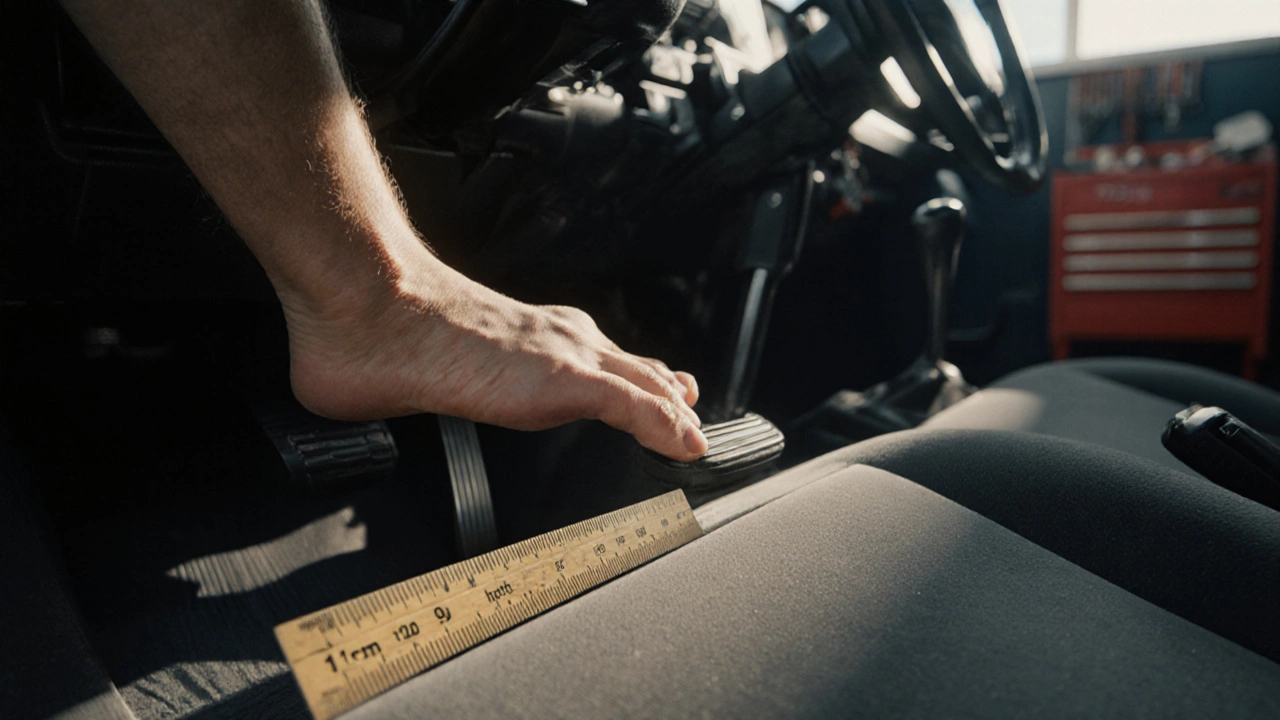
What causes clutch free play to change? Usually, it’s wear. The clutch cable stretches over time. Hydraulic systems develop air bubbles or leaks. The throw-out bearing wears down. Even a poorly installed clutch kit can throw off the alignment. You don’t need a shop to check it—just sit in your car, press the pedal slowly, and feel for that first point of resistance. Most manufacturers recommend between 0.5 to 1 inch of free play. If it’s less than that, your clutch is being eaten alive. If it’s more, you’re not getting full disengagement. This connects directly to posts about clutch replacement, when the clutch is worn out and needs a full kit swap, and clutch kicking, a habit that accelerates wear by riding the pedal. Fixing free play early can save you hundreds.
And here’s the thing—most people don’t check it until something breaks. They hear a grinding noise, feel the clutch slip, or notice the pedal is higher than usual. By then, the damage is done. Clutch free play is one of those silent killers. It doesn’t scream for attention. It just slowly kills your clutch, one mile at a time. That’s why the posts below cover everything from how to test it yourself to what happens when you ignore it. You’ll find guides on clutch adjustment, signs of a failing release bearing, and how clutch wear connects to other problems like transmission strain. Whether you’re a DIYer or just trying to understand why your mechanic says you need a new clutch, this collection gives you the real talk—not the sales pitch.
-
18 Oct
- Recent
- Popular